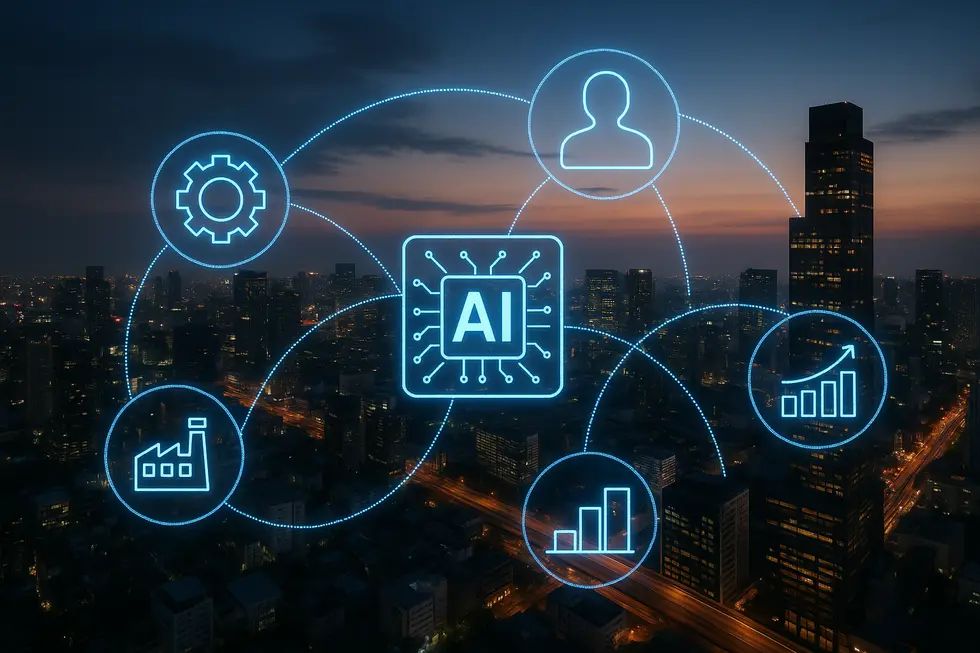
Harnessing Generative AI for Transformative Business Innovation
Introduction
Generative AI is revolutionizing the business landscape by enabling unprecedented levels of innovation and efficiency. With its ability to create new content and insights from vast data sets, businesses are leveraging these models to streamline operations, enhance marketing and customer interactions, and drive significant cost reductions. This article will explore how generative AI is being integrated into business operations across three critical areas: automation and software testing, enhanced customer engagement and marketing, and operational efficiency and cost reduction, providing business owners with actionable insights into maximizing this technology.
Tables of Contents
Chapter 1: Automation and Software Testing Leveraging Generative AI for Business Innovation
Unleashing Efficiency: Generative AI in Software Testing
Chapter 2: Automation and Software Testing Leveraging Generative AI for Business Innovation
Transforming Quality Assurance: Generative AI’s Role in Software Testing Automation
Chapter 3: Enhanced Customer Engagement and Marketing through Generative AI for Business Innovation
Revolutionizing Customer Interaction with Personalized AI-Driven Conversational Interfaces
Chapter 1: Automation and Software Testing Leveraging Generative AI for Business Innovation

Unleashing Efficiency: Generative AI in Software Testing
Generative AI-driven automation in software testing is revolutionizing quality assurance processes across industries. By employing advanced deep learning algorithms and natural language processing, generative AI tools can autonomously craft comprehensive test cases that simulate complex virtual environments. This capability allows for rapid adaptation to evolving software requirements, accelerating the testing process while ensuring broader test coverage. Traditional testing methods often miss edge cases and vulnerabilities, but with generative AI, organizations can steadily release higher-quality software, gaining a competitive market advantage. For more in-depth insights, visit Functionize.
A standout benefit of generative AI is its ability to dynamically generate test data and configure testing environments tailored to specific applications. This thorough testing encompasses a range of real-world conditions, such as network disruptions and hardware failures, ensuring robustness and resilience. Moreover, generative AI facilitates cross-platform and cross-device testing, guaranteeing consistent performance and user experience across various environments. By automating these processes, businesses are able to cut down on manual effort, significantly reduce human error, and optimize resource utilization.
Beyond mere automation, generative AI enhances defect analysis through predictive analytics, allowing teams to detect anomalies and potential issues before they escalate into critical problems. This technology supports intelligent test execution and holistic test maintenance, adapting to software changes over time. By taking a proactive approach to quality assurance, businesses are empowered to innovate with confidence, knowing that their software is rigorously tested and reliable. As generative AI continues to evolve, its role in shaping the future of software testing and business innovation will only become more pronounced.
Chapter 2: Automation and Software Testing Leveraging Generative AI for Business Innovation

Transforming Quality Assurance: Generative AI’s Role in Software Testing Automation
The integration of generative AI into software testing automation marks a significant shift in quality assurance strategies. This technology leverages sophisticated deep learning algorithms and natural language processing to autonomously generate comprehensive test cases and identify defects, fundamentally transforming traditional QA workflows into highly adaptive systems. By significantly accelerating the testing lifecycle and automating complex test case generation, it allows businesses to drastically cut down on the time required for QA cycles, enabling more rapid software releases.
Generative AI enhances operational efficiency by reallocating labor from repetitive manual tasks to strategic initiatives that demand human creativity and domain expertise. This shift is particularly beneficial in regression testing, where the technology continuously updates test scripts, minimizing manual intervention. Moreover, the approach expands test coverage, generating diverse scenarios from edge cases to boundary conditions, thereby increasing the likelihood of discovering hidden vulnerabilities before they impact production environments.
Quality assurance is further elevated by the consistency and accuracy of tests generated by AI. This consistency is matched by the technology’s predictive capabilities, which use historical defect data to anticipate potential issues before they arise, offering a proactive edge in defect detection. Therefore, AI’s predictive analytics not only optimize testing strategies but also sustain comprehensive test maintenance.
By ensuring cross-platform consistency and dynamic environment configurations, generative AI supports diverse user bases robustly and efficiently, enhancing performance across various devices and platforms. While generative AI manages routine tasks, QA professionals can concentrate on exploratory testing and strategic quality initiatives, augmenting their roles with the powerful capabilities of AI. The resulting synergy produces resilient QA processes that adapt rapidly, giving businesses a competitive edge in fast-paced digital markets.
Chapter 3: Enhanced Customer Engagement and Marketing through Generative AI for Business Innovation
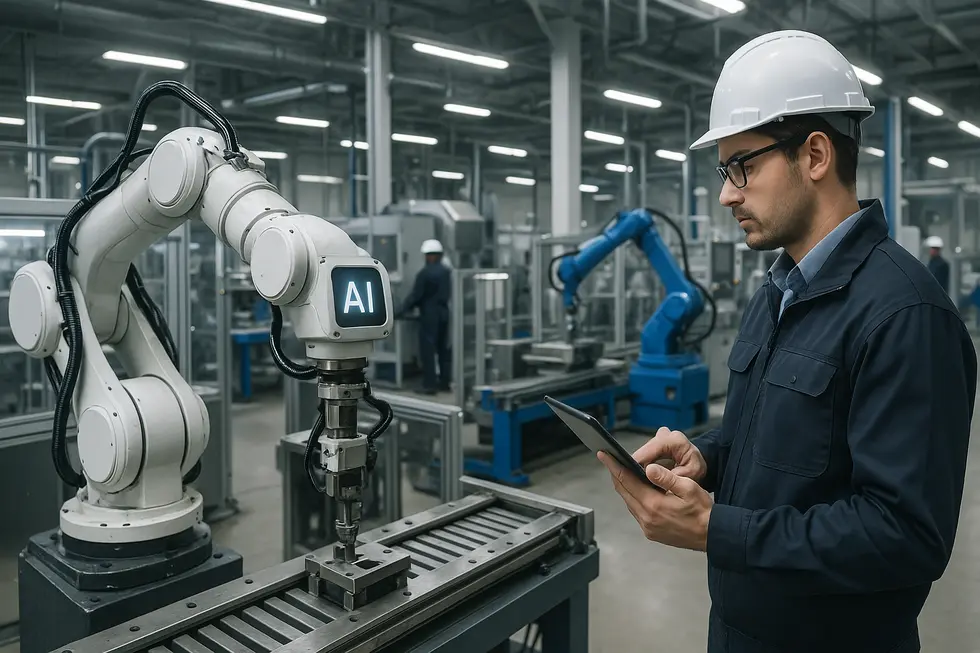
Revolutionizing Customer Interaction with Personalized AI-Driven Conversational Interfaces
In the realm of generative AI, conversational interfaces are transforming customer engagement by shifting from traditional reactive models to proactive, personalized experiences. Unlike the conventional support systems with response delays, AI-driven conversational interfaces operate tirelessly, learning and adapting from each interaction. This allows them to automate up to 80% of routine inquiries, enabling human agents to tackle more complex, nuanced issues.
The Power of Personalization at Scale
Modern consumers crave individualized interactions, with studies indicating that 72% prefer brands offering personalized experiences. Generative AI capitalizes on this by utilizing customer data to deliver tailored interactions across vast customer bases. An AI assistant can mimic personalized shopping guidance, recommending products based on an individual’s preferences, enhancing the likelihood of conversion.
Data-Driven Insights and Continuous Improvement
Each interaction with these AI systems provides valuable data, helping businesses to refine their offerings and customer experience. Conversational AI identifies frequent pain points and assists in product development. Additionally, the multilingual capabilities break down communication barriers, catering to a diverse clientele.
Operational Efficiency and Cost Optimization
By automating standard inquiries, AI conversational platforms not only enhance service quality but also significantly reduce operational costs. They ensure swift resolutions, optimize resource allocation, and accommodate growing customer demands without requiring a workforce expansion.
Enhanced Customer Retention and Lifetime Value
Beyond initial acquisitions, conversational AI maintains customer relationships through ongoing engagement. Scheduling follow-ups and providing post-purchase support, it reiterates brand commitment and simplifies transaction-related processes, thus fostering customer loyalty.
In effect, leveraging generative AI through conversational interfaces revolutionizes customer interaction, exceeding expectations by delivering scalable, personalized support, and driving innovation across customer journeys.
Final thoughts
Integrating generative AI into business processes offers transformative possibilities that enhance efficiency, innovation, and customer engagement. By automating routine tasks, creating personalized marketing strategies, and optimizing operational efficiency, companies can achieve significant advancements in productivity and cost-effectiveness. As more enterprises adopt these technologies, the potential for generative AI to redefine industry landscapes and drive new growth opportunities becomes increasingly evident.
Connect with our AI Strategy team today for a confidential, no-obligation consultation on how Generative AI can redefine your product pipeline and drive measurable ROI.
About us
We are dedicated to helping companies transform through the utilization of advanced Machine Learning, Generative AI, and predictive analytics.